Feelings Aren’t Reality (But They Matter)

Feelings are powerful. They arrive quickly, speak loudly, and often feel authoritative. When something feels right or feels wrong, we instinctively trust it. But feelings, for all their intensity, are not the same thing as reality.

Reality is what is true regardless of how we feel about it. Feelings are our internal response to reality, shaped by past wounds, present fears, unmet needs, exhaustion, and even hope. They are real experiences, but they are not reliable narrators.

A feeling can tell you, This is uncomfortable.
Reality asks, Is it wrong, or is it simply hard?

A feeling can say, I don’t have peace.
Reality may respond, Growth often comes before peace does.

This distinction matters more than we like to admit.

Feelings React. Reality Reveals.

Feelings tend to be reactive. They respond to stimuli. Stress, conflict, uncertainty, and vulnerability all stir emotions. Reality, on the other hand, requires discernment. It unfolds more slowly. It asks us to observe patterns, seek counsel, test assumptions, and wait.

When we confuse feelings with reality, we often make permanent decisions based on temporary discomfort.

That confusion doesn’t just affect relationships or life choices. It profoundly affects how we interpret God’s will.

Feelings and the Will of God

Many of us were taught, directly or indirectly, to equate peace with God’s approval and discomfort with His warning. While there is truth in the idea that God grants peace, Scripture and lived faith tell a fuller story.

God’s will is not always comfortable.
God’s calling is not always calming.
God’s truth is not always immediately reassuring.

Conviction can feel like anxiety.
Obedience can feel like loss.
Growth can feel like grief.

If we assume that God’s will will always feel peaceful in the moment, we risk avoiding the very places where He is trying to form us.

There are countless moments in Scripture where God led people directly into uncertainty, tension, and fear, not because they were wrong, but because they were being shaped.

When Feelings Become a Shortcut

One of the most subtle spiritual traps is using feelings as a spiritual shortcut.

“I don’t feel peace about this” can sometimes mean:

  • I don’t want to confront something painful.
  • I don’t want to risk being wrong.
  • I don’t want to sit with discomfort long enough to discover the truth.

When feelings are elevated to the level of divine instruction without being tested, prayed through, or examined honestly, they can become a way to stay comfortable rather than faithful.

It is especially dangerous when feelings are used to shut down questions, conversations, or self-examination. When emotions are framed as unquestionable proof of God’s will, growth stops. Truth remains unchallenged. And healing is delayed.

Discomfort Is Not Disobedience

There is an important difference between God’s warning and our resistance.

God may absolutely redirect us away from something that is not for us. But discomfort alone is not confirmation. Sometimes discomfort is the invitation.

An invitation to:

  • look deeper,
  • ask harder questions,
  • sit longer in prayer,
  • seek wise counsel,
  • and allow God to reveal what lies beneath the feeling.

Peace often comes after obedience, not before it.

Clarity often comes after honesty, not before it.

Holding Feelings in Their Proper Place

Feelings are not the enemy. They are indicators. They tell us something is happening internally. But they are meant to be examined, not obeyed blindly.

A healthier posture sounds like this:

  • “I feel uneasy. Why?”
  • “What might God be inviting me to face here?”
  • “Is this fear, or is this conviction?”
  • “Am I avoiding pain, or am I being protected from harm?”

God’s will is discerned through prayer, Scripture, community, humility, and time. Feelings may be part of that process, but they are never meant to be the final authority.

The Quiet Courage to Seek Truth

If we are honest, it takes courage to question our feelings. It is easier to label discomfort as divine direction than to admit we might need to grow, heal, repent, or wait.

But God is not threatened by our questions.
He is not offended by our wrestling.
He is patient with our confusion.

What He desires is truth. Not the version that keeps us comfortable, but the kind that sets us free.

If we want to truly follow God’s will, we must be willing to sit in the tension long enough to separate what we feel from what is true and to trust that even when the path feels unsettling, He is still present, still guiding, and still working for our good.

I’m

Stand-Up Comedy: It’s No Joke

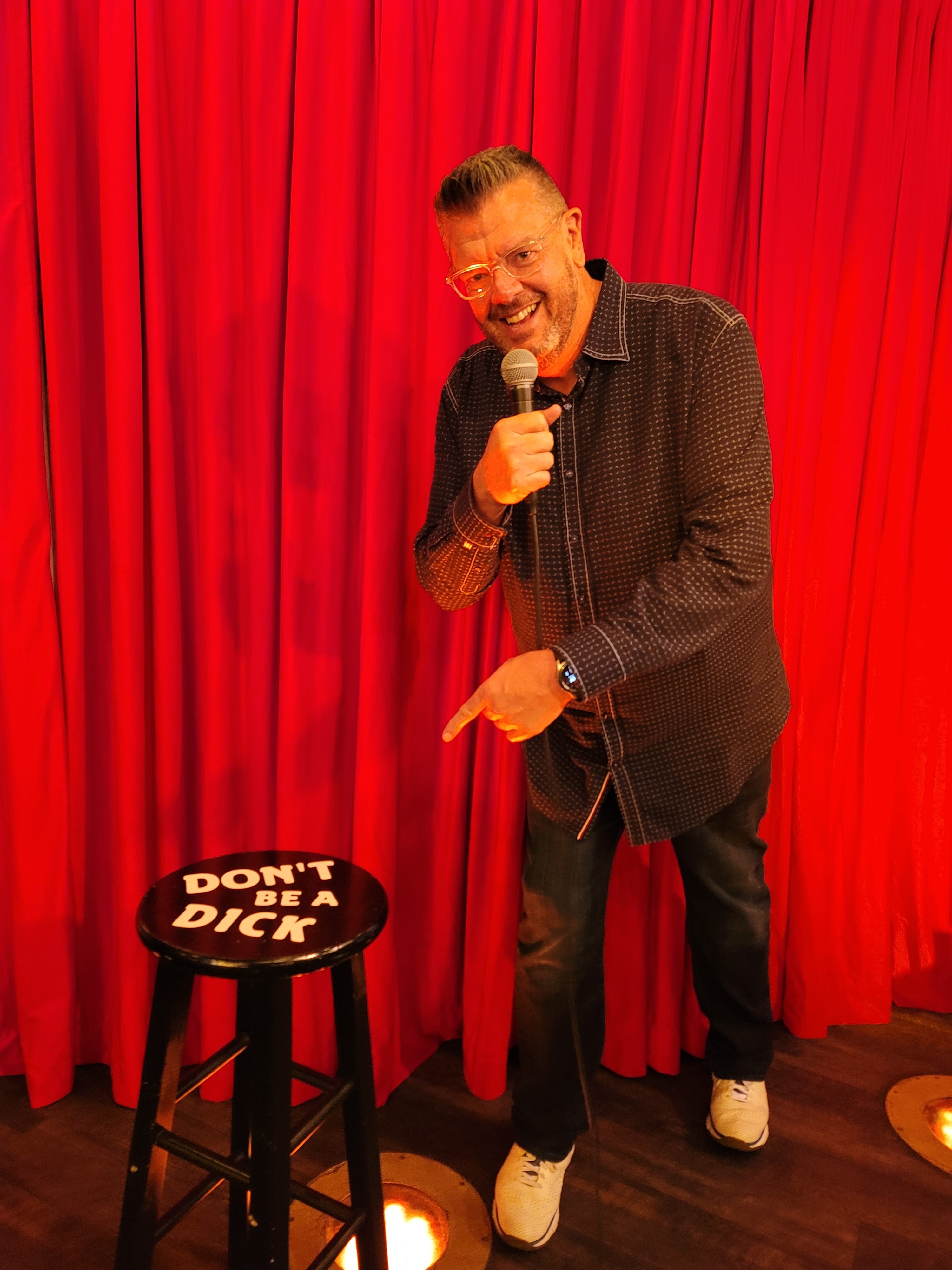
I am a stand-up comedian. Being a comedian is a source of pride for me. As someone that has never considered myself particularly creative, comedy has been the fuel to fire up the right side of my brain. When friends say, “I don’t know how you do that. I could never do that”, you can’t help but puff out your chest a little bit. When you’re on stage and everything is working, there is no better rush. You feel invincible. In a nutshell, comedy success can be a huge ego boost. That seems like all goodness, right?

Here is where it gets tricky. I don’t want to make broad generalizations about comedians, because we are a pretty diverse group. However, it’s no secret that most comedians are fucked up. Comedy for many is a coping mechanism for a potpourri of issues such as trauma, anxiety, social awkwardness, depression, etc. I’ll say it, most comedians are weirdos. And, that’s fine, because we know it. Clearly, we have a sense of humor about it. Because of this, the pride we get from excelling in comedy, coupled with newfound respect and admiration from others, can be a challenge to handle. Our lows were very low and now our highs are very high. This breeds new expectations.

You may have heard the quote “expectations are premeditated resentments”. When a comedian creates expectations of themselves based on emotion and pride, it’s easy to lose perspective. You resent that club that won’t book you, that festival that turned you down, that comedian friend who’s starting to leave you in their shadow. You start asking yourself questions like, “What am I doing? Is this even worth it? Why do I keep wasting my time with this?” I would wager that most comedians have felt this way at one time or another. I know I have multiple times, over my ten years in comedy. Even recently, I decided to take some time away and during that break, I wondered if I should ever get back on stage. I’ve fallen victim to unrealistic expectations I’ve created many times. It’s humbling but particularly humbling for such an insecure bunch as the comedian community. I’ve seen many comedians come and go over the years, and I would wager, this is why they hang it up. It can be a rollercoaster ride.

Recently, I had a couple of aspiring, young comedians express those same feelings to me. I was a little surprised because both of them have only started to scratch the surface of their comedic potential. I hated the thought of them giving up their obvious talent. I’m a father to three adult children and it was clear to me that it was time to do some dad shit.

As I started imparting my fatherly advice, I realized I was telling them what I needed to tell myself. Here are the highlights:

You have to quit asking yourself “Why am I doing comedy?” because the answers are usually tied to expectations you’ve created. It could be any number of answers…I want to make aliving doing comedy. I want to have a comedy album. I want to be a headliner. I want to have a million followers. I want to have a Netflix special. I want to be famous…and the list goes on. You’ve turned something you love doing into a grind. The question you should ask yourself is “Why do I enjoy doing comedy?” They say that if you love what you do, you’ll never work a day in your life. If you are having fun, you’ll keep writing and performing. Do you know the best way to improve as a comedian? You keep writing and performing.

Comedy shouldn’t be a competition, at least not in the traditional sense. I grew up playing sports and I am embarrassingly competitive. I hate losing more than I love winning. When you are competing with someone, there is a winner and there is a loser. As a competitor, losing, is an unrealized expectation. I passed that competitive gene on to my daughter. She competed in much the same way as I did until she started running track in high school. She had some amazing coaches and she excelled even beyond what she probably expected. She was All-State, got a full scholarship to a D-1 school, and set records in college. When I look back on her running career, I bet she would agree, that her coaches were a big reason for her success. Sure, she did the work, but they provided guidance. Maybe the most valuable guidance they gave her was that she wasn’t racing the girl next to her. She was racing against her personal best time. Even though it could be frustrating to not break your personal best, there is still a sense of pride that you set that personal best. What an amazing concept; you never lose. It’s the same as a comedian. When you focus on how others are doing and measure yourself against their standard, it feels like a loss if you don’t measure up. Just try to be better than you were the last time you were onstage.

When you quit setting expectations, stop measuring yourself against others, focus on being the best version of yourself, and just play for the love of the game, you’ll improve as a comedian and gain a healthy perspective of where comedy belongs in your life.

You’re not alone. We’ve all struggled, but remember that there is a common bond we share as comedians. We have all stood in front of a room full of people, many of whom may be dealing with struggles outside of that room, with the sole responsibility of bringing them joy and laughter. It’s very cool to be able to do that. So even when you are discouraged, remember that your gift matters. I will always have respect for my brothers and sisters in comedy. I believe it’s our responsibility, having walked in the same shoes, to lend a sympathetic ear and proffer words of encouragement.

People still say to me, “I don’t know how you get up there and do that. I could never do that.” As it turns out, that’s the easy part. But make no mistake, stand-up comedy is no joke.

http://www.BryanMortonComedy.com

Generation X: Time To Fall On Our Swords

A few months ago I was introduced to a new phrase being used in popular culture, largely by Gen Z, but also a few of the younger Millennials. “OK, Boomer” has really picked up steam in our national lexicon, as we add generational differences to the long list of things we have embraced to further divide us.

I didn’t think much of it until I saw a disrespectful, little shit use that phrase in a derogatory response to someone, for which I had great respect. As I ran it over in my mind, that exchange angered me more and more. How could someone so young and naive show such disrespect to someone well respected by so many? As someone who grew up with some of the earliest Baby Boomer parents, I couldn’t imagine myself or anyone speaking to them in that manner.

Now is probably a good time to set some expectations for this post. I am not a fan of sweeping generalizations of any group, including generational groups. So even if I observe some very common characteristics of a specific generational group, please know I am not pointing a finger at everyone in that group. There are always exceptions to the rule. With that disclaimer, let’s make some sweeping generalizations.

Growing up as part of Gen X, I think what angers me so much about the sentiment of Gen Z toward Baby Boomers can be attributed to the differences in how our generations were raised.

I grew up in a generation where when you had a problem with a teacher, they got the benefit of the doubt. If I was upset with my coach for not getting playing time on my basketball team, they got the benefit of the doubt. Why shouldn’t they?  They had a whole classroom or team they were uniquely trained to lead, guide and develop. I was just one kid who most likely had not yet learned, that I was not the center of the universe. I grew up in a generation where there were winners and losers and some of the biggest lessons you could learn in life were through defeat. My generation had the kids table during the holidays. Who remembers that? When you were finally seen as an adult, you got to graduate from the kid’s table and sit with the adults. That was a good day! There was a process for moving from childhood to adulthood. You weren’t entitled to respect just because you were a person. You had to earn respect. Just because you were a person, your opinion just didn’t hold as much value because you still lacked the wisdom of life experience. That point is sure to ruffle the feathers of the well-educated Gen Z’ers, who believe that their knowledge is better than the wisdom that comes from half a century of learning and life experience. However, as someone that has lived 49 years, I know learning is perpetual. I also have a college degree with two lifetimes of learning on the oldest Gen Z’ers, but more importantly, I have gained enough wisdom to know that there is still much I have to learn.  In fact, I am a firm believer that when someone thinks they have it all figured out, that is when they are most lost.

I spoke about my idea for my blog post with my daughter the other night. She is part of Gen Z, but I would consider her the exception to the rule. She expressed the same disdain for the lack of respect many of her generation show to older generations. She will graduate Summa Cum Laude from a prestigious academic college with a BS in Mathematics and Psychology. She is one of the smartest people I know, but even she will tell you that her 22-year-old human brain won’t be fully developed until the age of 25.

At this point, you may be thinking, “This is just some old dude slamming Gen Z’ers for being unwise, self-centered and disrespectful.”

Plot twist…

This is about my Gen X’ers! It’s time for us to fall on our swords. Culpability for most of the teen and adult aged Gen Z’ers falls squarely on us (and maybe some older Millennials). We raised that generation. We have taken helicopter parenting to new heights. We protect our children from failure because we know how much it hurts to fail. We are raising a generation to believe that the world revolves around them and that they are automatically entitled to the same respect others have earned. We give them the benefit of the doubt when they haven’t earned it because we love them. Gen Z ranges in age from 4-24 years old. We have already established that the oldest of that generation is still a year away from having fully developed brains, so we need to shoulder some responsibility for their attitudes and actions.

When I think back to my conversation with my daughter, why is it that she seems to be the exception to the rule? If there is anyone in Gen Z that has the education, background, and accomplishments to come across as a know it all, it would be her. So why isn’t she? Why does she cringe when she sees a peer disrespect one of her professors? I think it can be summed up in a single word – humility. Humility is defined as “a modest or low view of one’s own importance”. On the face of it, what parents teach their kids is oftentimes the exact opposite of that definition. We want our kids to be proud of who they are. No one wants their kids to have a “low view of their own importance”, but I contend, a “modest view” will take them far in life. It’s unfair to teach the virtues of having pride without teaching how to live the attributes and characteristics for which you should be prideful. Proverbs 11:2 illustrates the virtues of humility beautifully: “When pride comes, then comes disgrace, but with humility comes wisdom.”  As much as my daughter has accomplished academically and athletically in her life she has had to overcome failures to reach her goals. With humility, she has gained wisdom and become a better person for it.

I would worry about the eye rolls from Gen Z as they read my post, but let’s be honest, Gen Z’ers aren’t reading my posts. It doesn’t matter because this post is for my fellow Gen X’ers. It’s not too late for us to teach Gen Z the respect that we were taught by the Boomers that raised us and the importance of the humility we have gained through a lifetime of experience.